 Gamification and game-based learning have been hot topics in the world of learning and development for some time now, but did you know that they’re completely different?
The game-based learning market is booming. Worldwide revenues reached $2.6 billion in 2016, and are expected to skyrocket to a whopping $7.3 billion by 2021!
That’s why you need to understand exactly what it refers to, and how you can get in on the action. Firstly, what’s the difference between game based learning and gamification?
Game-based learning
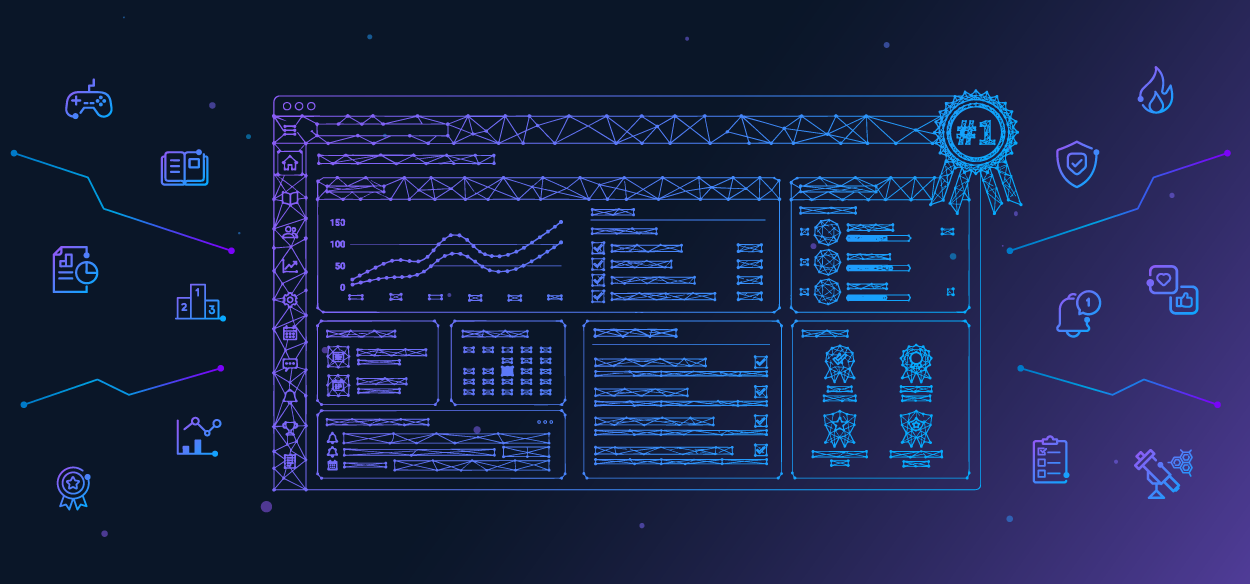
Gamification is the process of applying game mechanics (points, levels, badges) to non-gaming scenarios (such as learning). Essentially you have a traditionally structured training programme or LMS, and you sprinkle your gaming mechanics on top of it to add some extra oomph.
 Game-based learning on the other hand is almost a reversal of this. With this approach, you deliver your learners a fully-fledged, interactive game. This game is used as the foundation, and the training content is added on, or woven into it.
The typical scenario for a learning game involves playing a segment of the game and then being presented with some more traditional eLearning material. The game helps to boost engagement levels as you work through the content, helping you to take in more of the training and increase knowledge retention.
The gaming mechanics often come into play during the learning sections as well. For example, your learners could earn power-ups throughout the game, which they can use during a quiz. They might offer them more time, or remove some of the incorrect answers to make things easier.
Types of game-based learning
There’s no one-size-fits-all when it comes to game-based learning, so you need to find something that suits your needs:
1. Custom-built games
One option is to build a fully-functioning game from the ground up. You can design your game exactly as you see fit, to deliver training in exactly the way you want it to. It would be the perfect game for your learners.
The obvious draw-back here is that the vast majority of us are not game designers. Unless you’re lucky enough to have one hanging around, then your only option is to look to a third party to handle the creation process for you, and that can be expensive.
2. Rapid game authoring
Chances are that you’re looking to create a learning game without investing too much of your time and budget. Rapid authoring tools, like our own Genie, offer you a number of pre-built game templates. All you need to do is upload your content and slot it in, bringing it to life in a flash!
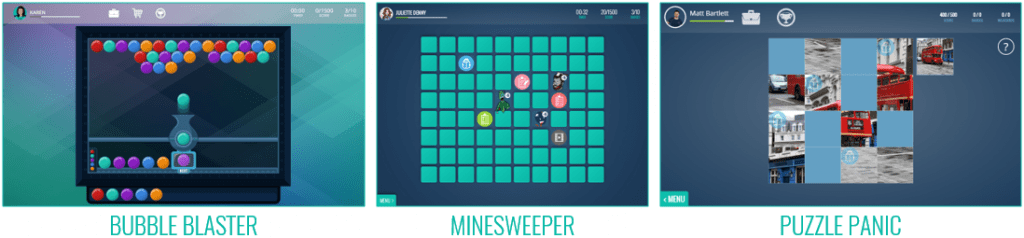
Though you’ll have a wide selection of templates at hand, your choice is still very important. You should choose something which is relevant to the training in question, to avoid any disconnect between the game and content.
3. Using commercial video games
Of course, there are plenty of fantastic video games out there which can be used in some very imaginative ways. For example, plenty of teachers have deployed sandbox games such as Minecraft in the classroom, to promote creativity, collaboration, and problem solving.
Using existing games like this generally works best when working hands-on with a small group. The game was not developed specifically for your training programme, so you’ll need to provide a fair bit of your direction to your learners.
Keep an eye out for plenty more entries into our Online Learning Glossary over the coming weeks!
And if you’re looking to find out more about Genie, our game-based authoring tool, click the banner to sign up for a free 30-day demo: